
Safe Balance
Supporting Your Safety, Mobility, and Independence
Falls can have a significant impact on health, mobility and quality of life. According to the Centers for Disease Control and Prevention (CDC), nearly 1 million older adults are hospitalized each year due to falls in the United States. Even when a fall does not result in serious injury, the fear of falling can cause individuals to limit everyday activities, potentially affecting their confidence, mobility, and independence.
Safe Balance is a comprehensive fall prevention program designed to help healthcare providers identify potential fall risks before they lead to injury. Through early identification and personalized recommendations, Safe Balance helps you and your provider take proactive steps toward improving safety, maintaining mobility, and protecting your independence.
Source: Centers for Disease Control and Prevention, National Center for Injury Prevention and Control. Web-based Injury Statistics Query and Reporting System (WISQARS). Accessed March 11, 2024.
A Personalized Approach to Fall Prevention
Everyone's risk of falling is different. Safe Balance uses a clinically supported assessment process to evaluate factors that may contribute to falls across three key areas:
- Physical: Balance, mobility, strength, and other physical factors that may increase your risk of falling.
- Environmental: Everyday surroundings and conditions that may contribute to falls.
- Psychological and Medicinal: Fear of falling, medication considerations, and other factors that may affect balance and stability.
Your assessment results provide valuable insights that help your healthcare provider identify potential concerns and develop a personalized care plan. This approach focuses on addressing your individual risk factors while supporting your long-term safety, mobility, and independence.
What to Expect During Your Safe Balance Assessment
The Safe Balance assessment is a simple process designed to help your healthcare provider better understand your fall risk.
Step 1: Screen
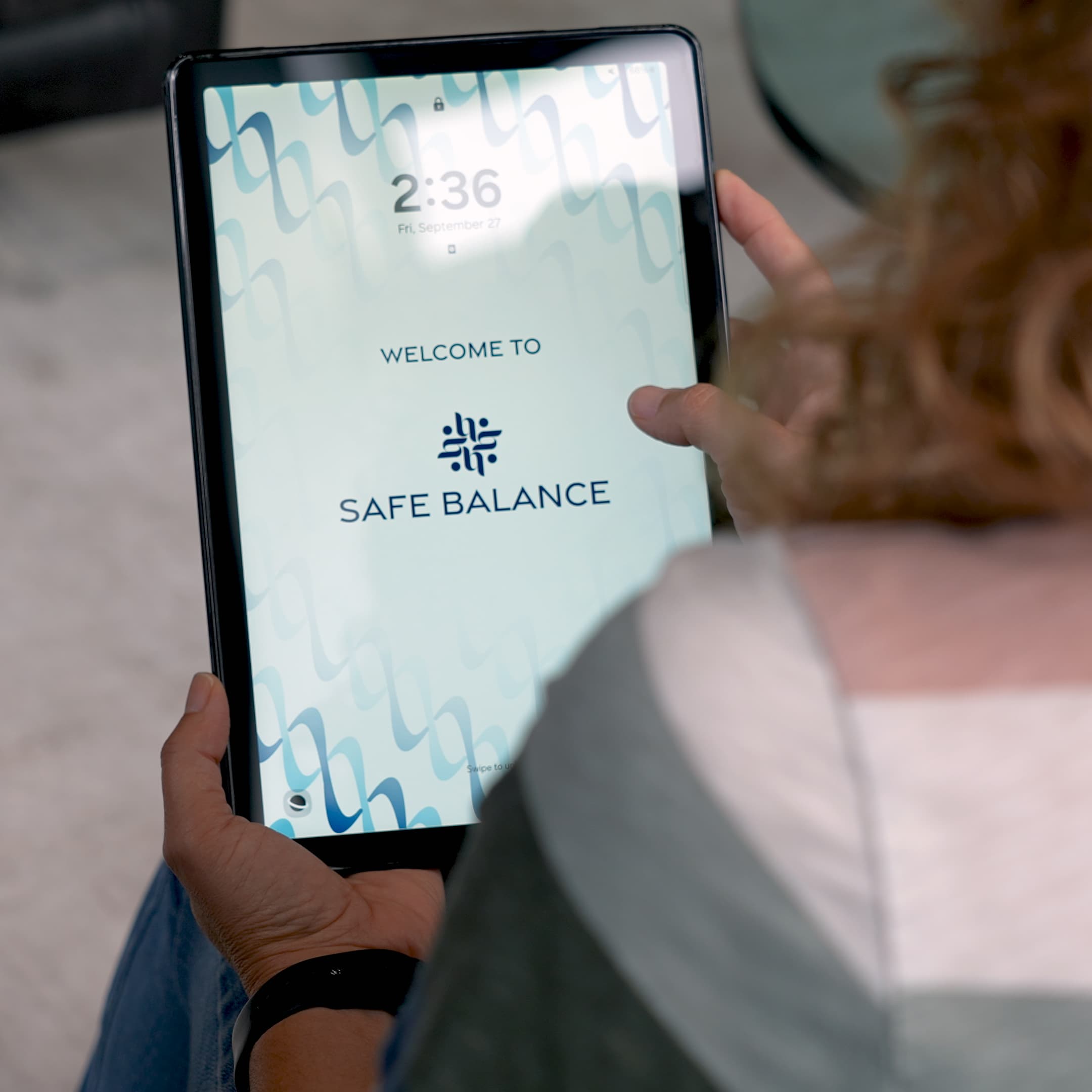
You will complete a brief questionnaire on a Safe Balance tablet during check-in. Your responses help identify factors that may increase your risk of falling.
Step 2: Assess
If you are physically able, you will complete a balance assessment in the exam room to help evaluate your stability and mobility.
Step 3: Review
Your healthcare provider will review your assessment results, discuss any identified concerns, and recommend appropriate next steps based on your individual needs.
Step 4: Intervene
Based on your results, your provider may recommend interventions to help reduce your fall risk. Follow-up assessments may also be performed to monitor changes and track your progress over time.
When Might You Receive a Safe Balance Assessment?
Your healthcare provider may recommend a Safe Balance assessment as part of your routine care, before or after a procedure, or when concerns about your balance, walking, or mobility arise.
Assessments may also be repeated over time to help your provider monitor changes in your fall risk and make adjustments to your care plan as needed.
Insurance Coverage and Billing
A Safe Balance assessment is a separate service from your standard office visit and may appear on your Explanation of Benefits (EOB) under CPT code 97750, which is used for physical performance testing.
Insurance coverage and out-of-pocket costs vary depending on your individual insurance plan, deductible, copayment, and other benefit requirements.
If you have questions about coverage or potential costs, please contact your insurance company.
Take the Next Step Toward Fall Prevention
Understanding your fall risk is an important first step toward protecting your health and independence. By identifying potential concerns early and working with your healthcare provider to address them, you can take meaningful steps toward maintaining your balance, confidence, and mobility.
Your safety and independence matter. Learn more about fall prevention and the resources available to support you.